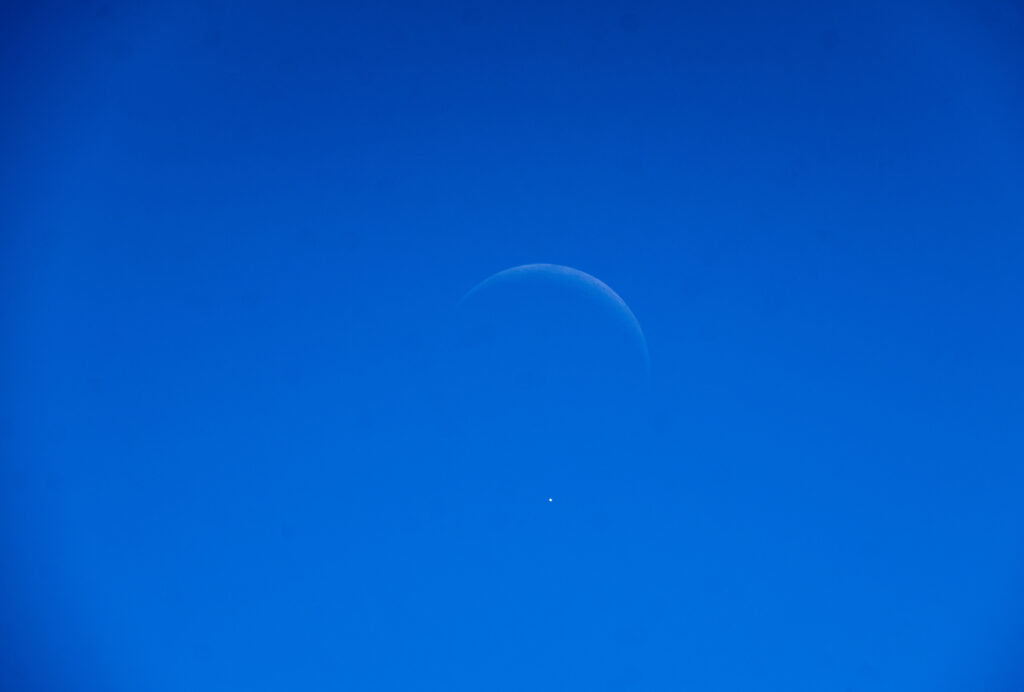
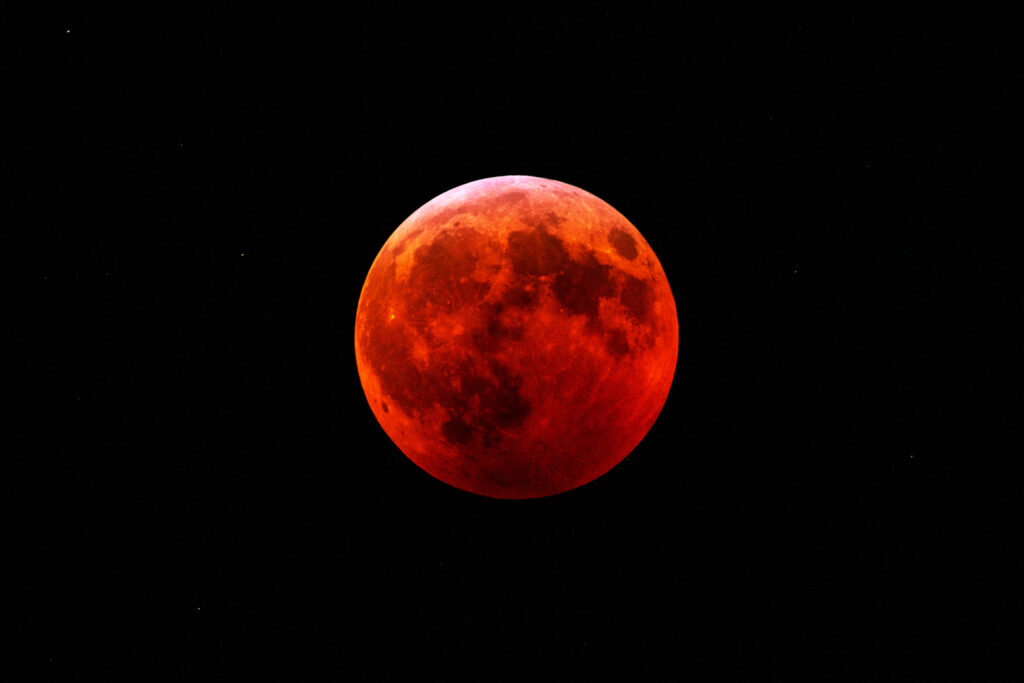
In North America March 2-3, 2026, there will be with a total lunar eclipse. After this total lunar eclipse there will be a partial eclipse on August 28, 2026, with 96% of the Moon covered during totality but be sure to catch this one if you can because the next total lunar eclipse won’t be until December 2028. Lunar eclipses take a long time to transpire and don’t require extensive travel, unlike total solar eclipses where sometimes you have to fly somewhere to get into the path of totality. Lunar eclipses cover large swaths of earth and everyone in the shadow sees it at the same time.
Early in the morning of March 3, 2026, the full Moon will pass through Earth’s shadow and we’ll get to see a total lunar eclipse. Lunar eclipses occur when the Moon is full at the same time that it passes through Earth’s orbital plane. Only then can our planet’s shadow darken the lunar face. Observers in North America will see this drama unfold during the early morning hours, with the western part of the U.S. and Canada best positioned to see it. For much of Australia and east Asia, it happens during the evening. Unfortunately, not all of the Americas will see all of the phases of the eclipse. Sadly those living in Europe will miss this memorable event entirely.
In the Eastern time zone, much of the eclipse will unfold during a brightening dawn sky with the Moon low in the west. If possible, observe from a location with an unobstructed view to the west. In Richmond, VA totality begins at 6:04 a.m., only about half an hour before moonset and just when the Sun is rising. Bring binoculars, as the Moon will grow pale and faint as it departs while still in total eclipse.
Farther west, from Minneapolis, MN, the partial eclipse takes place in dark sky, with totality starting at 5:04 a.m. local time, shortly after the beginning of morning twilight. The Moon peeks out from the umbra at 6:03 a.m., marking its return to partial eclipse, about 20 minutes before sunrise.
From my home in Southwest Montana, I will experience totality unaffected by twilight, and be able to watch the Moon pass through partial eclipse before it fully exits Earth’s inner shadow minutes before sunrise. For those lucky enough to live in the Greatest Place on Earth, California, observers will see the whole lunar eclipse start to finish with time to spare. When the partial eclipse ends at 5:18 a.m. local time, it will still be early twilight. The Moon’s relatively low altitude during much of the eclipse, as well as it happening at dawn from many locales, will make for excellent opportunities to capturing photos of this delightful event even with your cellphone camera, although the moon will be small in a phone photo.
I wish you clear skies for this the last of total lunar eclipses in North America for quite a while.